Soil
The soil composition is an important factor to consider early in the design of the apiary. Soil composition is largely determined by pre-existing geology,topography, and prevailing weather conditions. Non-native soil can be costly to introduce and difficult to maintain. On the other hand, native soil supports native plants in most situations can be improved through the addition of organic matter. Either way, knowing the soil composition of the site will dictate many of the plant choices.
The design goals regarding the soil are:
- Determine the soil qualities of the site (texture, fertility, moisture retention)
- Identify methods to alter soil conditions if needed
- Determine low effort methods to add or maintain soil fertility
Soil Texture
Soil Texture is generally expressed according to the proportions of sand, clay, and silt. A Soil Texture Triangle is a map of common soil texture names by those proportions.
Soil Texture Triangle
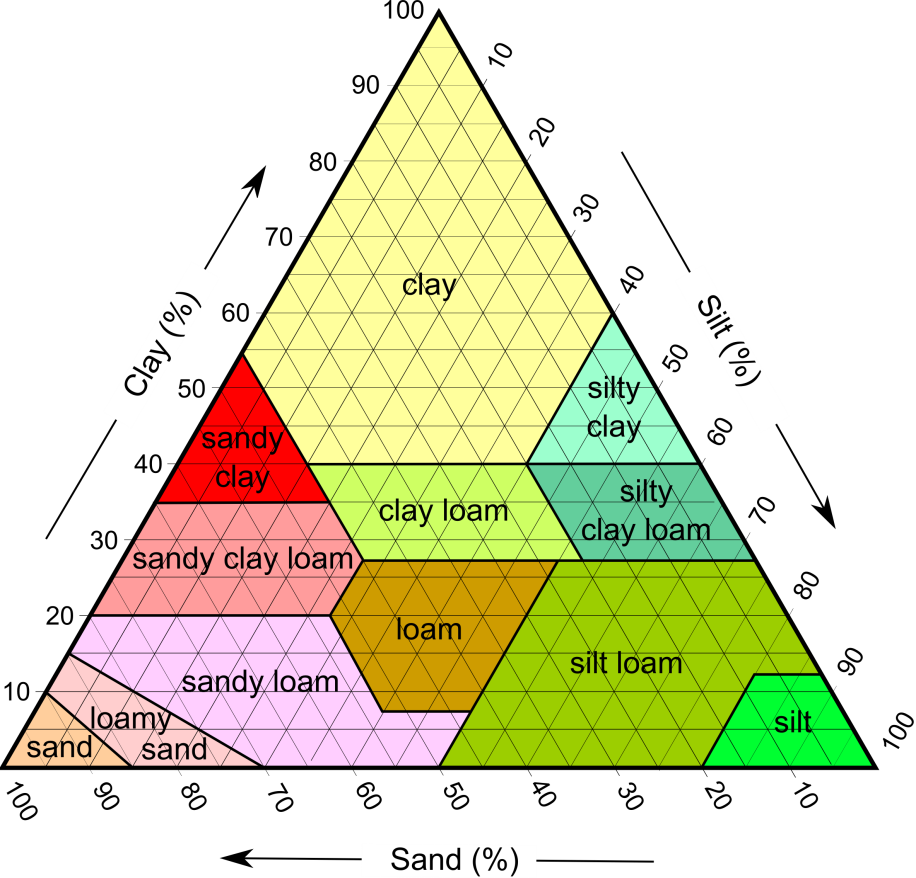
Determining Native Soil
Many counties and local extension offices offer GIS map data that reports on native soil composition. For the apiary, three different soil types soil types exist:
- Loamy Sand
- Sandy Loam
- Silt Loam
Fertility
Soil must also contain nutrients needed for plants and other organisms to thrive. Fertility describes the soil's ability to sustain life.
The property was formerly used for commercial agriculture, and is currently has fairly poor fertility. Areas where plants requiring more fertility will need to be amended.
To determine the soil types in your area, check with your county extension office or search your favorite search engine for your county's GIS system. Soil type or composition will likely be a layer you can enable.
Fertility Improvements
For soil to become or remain fertile, nutrients such as Nitrogen, Phosphorus, and Potassium must be continuously added in the correct proportions. Most local extension offices will include nutrient contents in soil reports as well as offering recommendations for fertilization.
Commercial Fertilizers
Commercial fertiliziers are typically sold according to their proportions of Nitrogen, Phosphorus, and Potassium in the form of an NPK number. They offer great control over the application of specific nutrients for fine tuning the soil chemistry.
Commercial fertilizers can be expensive and require frequent application. Too much fertilizer, or fertilizers applied in the incorrect proportions risk damaging both the soil and the plants.
Compost
Compost is made by microorganisms out of organic materials. Food and yard waste can be recycled in to compost inexpensively. Compost also contributes live beneficial bacteria to the soil, which helps the soil maintain a healthy living ecosystem.
Generally, a 1 m2 cube or larger sized pile of organic material turned monthly will yield an acceptable batch of compost. Some attention must be paid to the materials added. For resources on manufacturing compost, refer to these guides.
Some routine maintenance and space is required to have steady compost production. It can take between 2 months and a year for a compost pile to be mature enough to use. Infrequent turning, or an overabundance of certain kinds of materials can cause bad odors. Odors from the compost pile may attract pests.
Vermiculture
Worms like nightcrawlers and red-wrigglers consume organic matter in the soil, and produce castings (worm poop) containing beneficial bacteria and nutrients more readily accessible to plant roots. Worms require mild temperatures and moist soil to survive, but their eggs survive more harsh conditions and will hatch when conditions are favoriable. Vermicompost (worm castings) have very little risk of damaging soil or plants, regardless of the amount.
The presence of worms, such as nightcrawlers and red-wrigglers, usually indicates a healthy soil system. They also slowly consume the mulch layer, turning it into nutrient rich castings with very little maintenance.
Unless the soil is loamy, moist, and containing enough organic matter, worms are unlikely to thrive and contribute fertility. Managing separate containers with worm bins avoids issues with native soil, but requires space, some equipment, and considerable effort to maintain. High amounts of vermicompost cause the soil to hold onto moisture longer, which may not be desirable for some plants. Compared to other methods, vermiculture takes time, as we are at the mercy of the worms to do the work.
Moisture
The moisture retention qualities of the soil can make it more of less favorable for certain plant varieties. Some plants may fare better in well drained soil, while others may prefer moist soil. Too much moisture may promote diseases or unpleasant odors.
A compost or mulch layer can help keep moisture in the soil. For pots or raised beds, the addition of vermiculite or perlite...
Soil Alterations
Soil Additions
The addition of clay and organic matter would bring the soil closer to an ideal Loam soil type. While it typically requires less effort to work with the soil available, amendments can sometimes broaden the plant choices and help plants thrive.
While this is far from an exhaustive list, these are considerations for soil additions:
- Compost - Adds organic matter to improve fertility and can be made in some quantities on site
- Peat moss - adds organic matter and lowers pH. Depending on availability, this may not be a sustainable option
- Worm Castings - Adds fertility without risk of overfertilization; Worms make this naturally if conditions are favorable
Raised Beds
As an alternative to native soil, raised beds offer opportunities to raise plants unsuitable for the native soil and to provide more control over drainage, aeration, and nutrient availability.
Containers
Containers offer many of the advantages of raised beds, but are portable. Less hardy plants can be raised in containers and moved indoors in cold weather.